Page 1
Cover and condition summary
The homeowner sees their own house, the inspection date, and a two-sentence verdict in plain English. No jargon before they have even started reading.
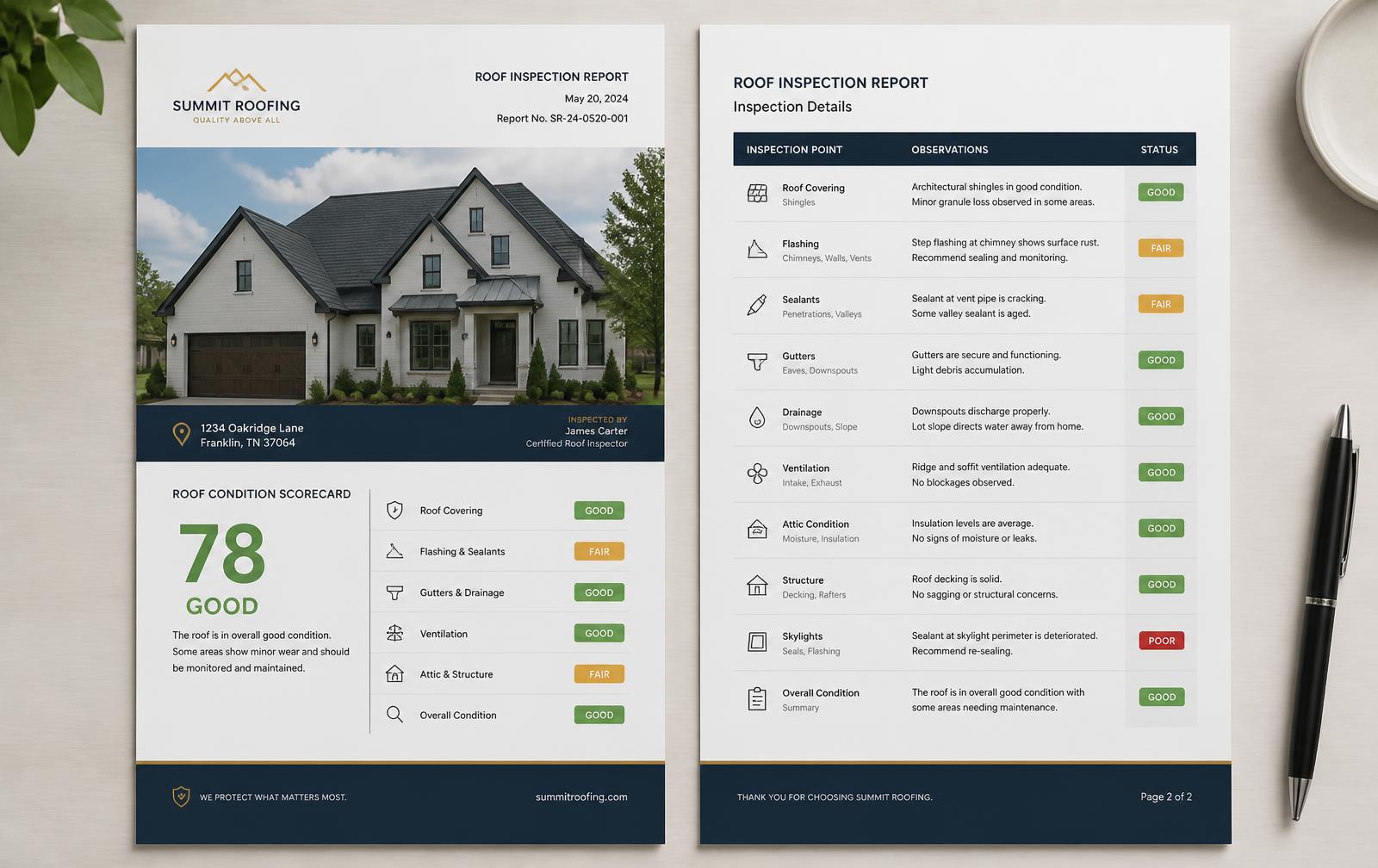
A professional roof inspection report opens with the property and a plain-language verdict, shows all 21 inspected points in a colour-coded table, then walks through each finding worst-first with the photos that prove it.
Below is a page-by-page walkthrough of a real PointView.ai report, so you know exactly what the homeowner is holding when you start talking price.
Page 1
The homeowner sees their own house, the inspection date, and a two-sentence verdict in plain English. No jargon before they have even started reading.
Page 2
Every inspected point with a colour-coded status, sorted so the failures sit at the top. This is the single page most homeowners photograph and send to their partner.
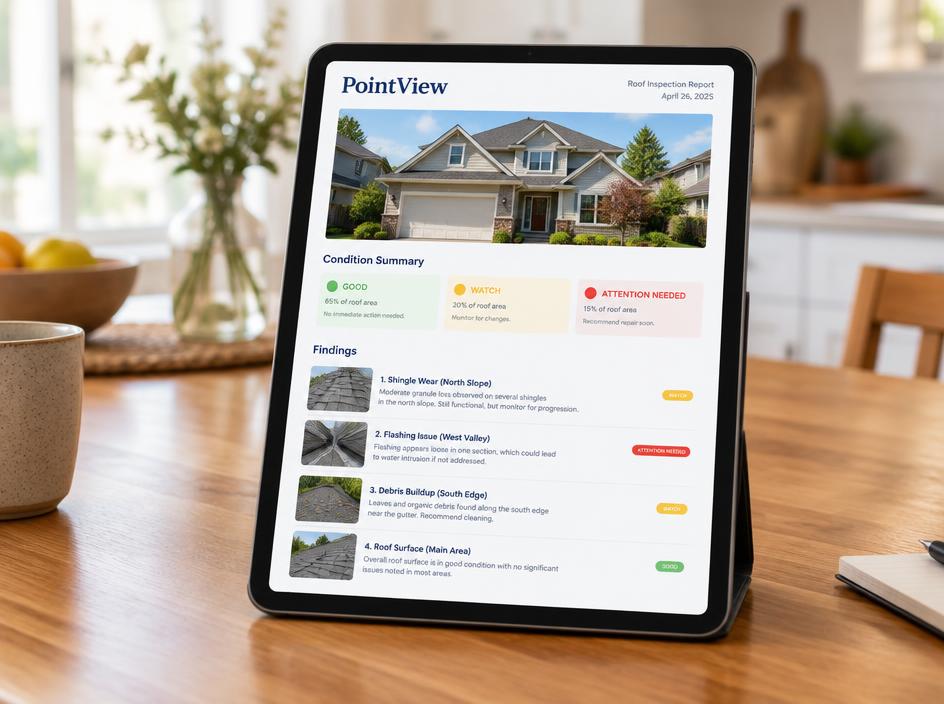
Pages 3+
Each finding explains what was found, how serious it is, and what to do — with the photos that prove it sitting right beside the text.
A good report opens with the property address and a photo of the house, follows with a plain-language condition summary, then a table of all 21 inspected points marked pass, monitor, concern, or fail, and finally the individual findings sorted worst first with photos beside each one.
Most residential reports run four to eight pages. Length depends on how many findings there are — every finding adds a block with its photos. A report with no failures can be as short as three pages.
Always. A finding without a photo is just an opinion. Include a wide shot that shows where the issue is and a close-up that shows the damage itself, placed next to the finding they support.
The homeowner, not another roofer. Use plain words, explain what each issue means for their house, and avoid trade jargon and abbreviations.
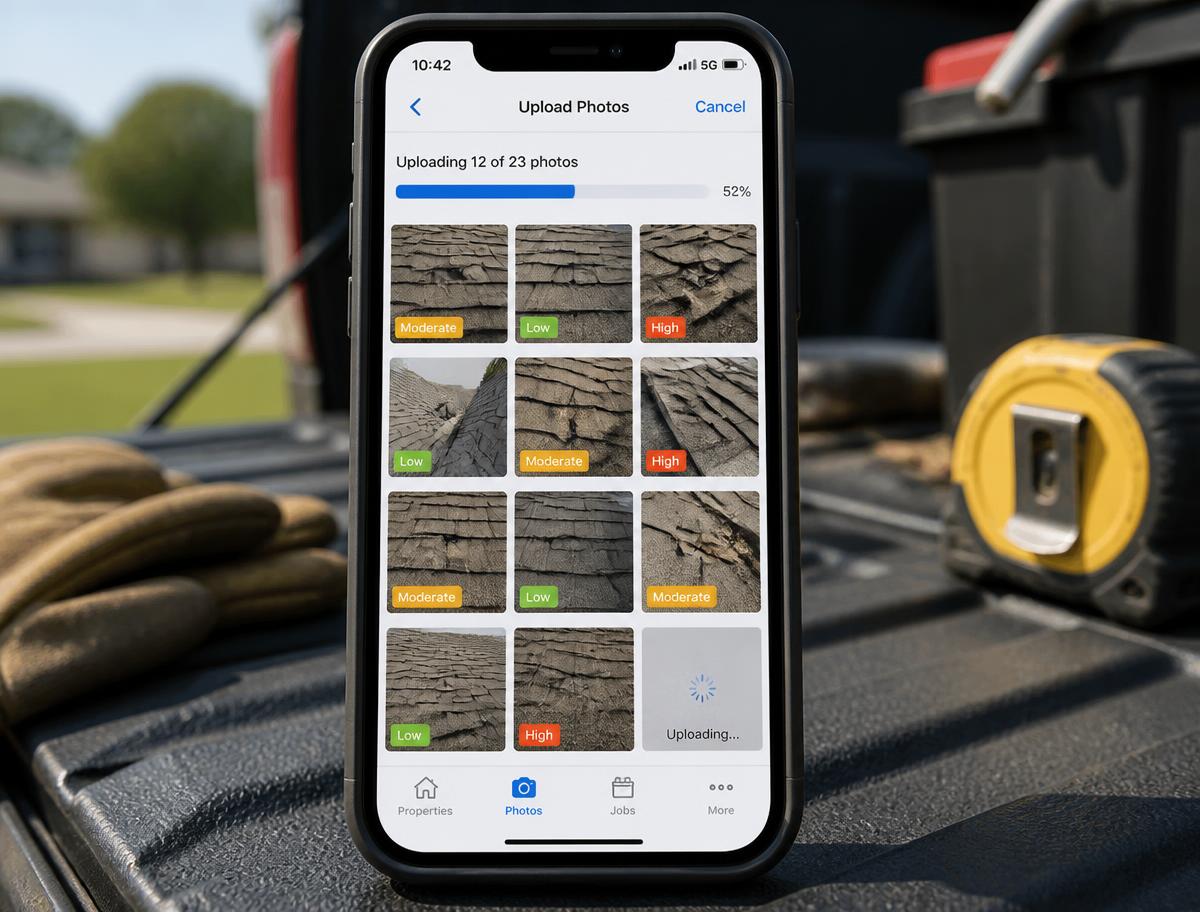
Run the 21 points on your phone, shoot the photos, and hand over the finished PDF before you leave the driveway.
Start free